
Conveyor System for the Automobile Manufacturing Industry
We provide robust conveyor and automation solutions for the demanding needs of the automotive industry.
Overview of Automobile Manufacturing Industry
In the automobile industry, time, accuracy, and safety matter every single day. From handling heavy metal parts to moving delicate assemblies, every step needs to flow smoothly. This is where a well-designed conveyor system becomes a backbone of the manufacturing process.
At Eti Automation, we work closely with automobile manufacturers and component suppliers. Over the years, we have seen one clear truth: when material flow is planned properly, production becomes faster, safer, and far more predictable.
We explains how conveyor systems support automobile manufacturing, where they are used, and what to consider before choosing one. Think of this as a practical conversation, not a sales pitch.
ETI Conveyor focuses on safety and supreme performance when it comes to manufacturing conveyor components for the automobile industry. Our technical experts and quality engineers work tirelessly to deliver the custom-built solution to meet the exact need of customers.
Consistent innovation in vehicle design, safety standards, speed as well as fuel efficiency is a crucial factor in the automotive industry. In this background, sturdy and innovative technology-based machines and equipment are being used by automobile companies.
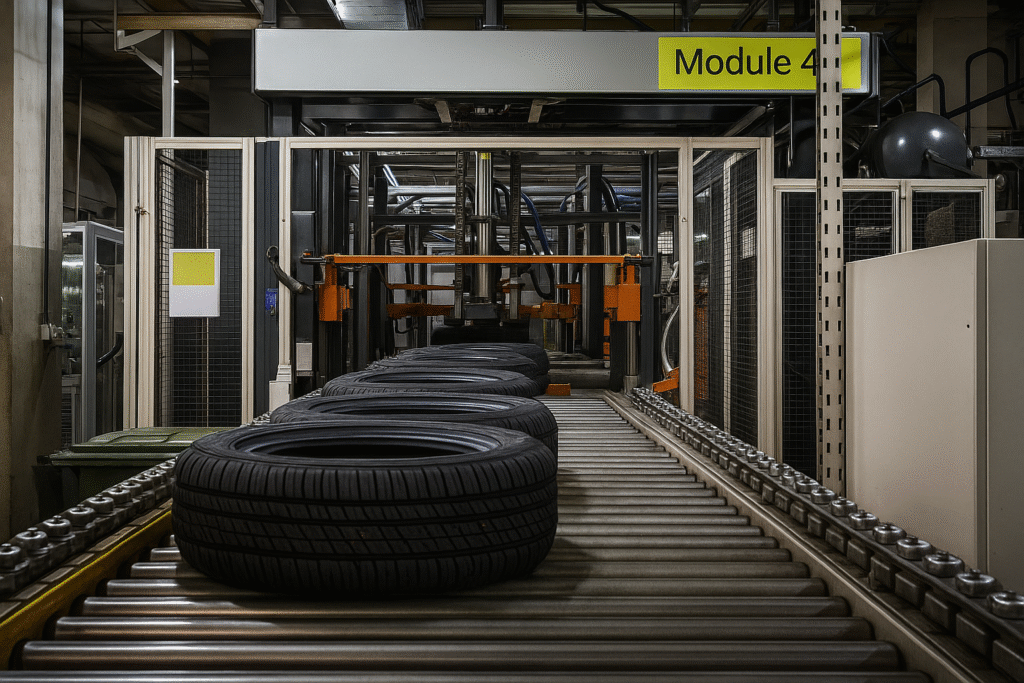
Where Conveyor Systems Are Used in the Automobile Industry
Conveyors play a role across almost every stage of vehicle manufacturing. Below are some common and practical applications.
Body Shop Conveyors
In body shops, conveyors move car bodies through welding, inspection, and framing stations. These systems must be strong, stable, and accurately aligned.
Common challenges here include:
- Handling heavy loads
- Maintaining consistent speed
- Working in harsh environments
Well-designed conveyors reduce rework and improve line balance.
Assembly Line Conveyors
Assembly lines are the heart of automobile manufacturing. Here, conveyors ensure that parts arrive at the right place at the right time.
These conveyors help with:
- Door assembly
- Dashboard fitting
- Interior components
- Final vehicle assembly
A smooth conveyor flow allows workers to focus on quality instead of lifting or pushing parts manually.
Engine and Transmission Handling
Engines and gearboxes are heavy, valuable, and sensitive components. Conveyor systems used here must offer:
- Strong load-bearing capacity
- Controlled movement
- Safety features
At Eti Automation, we often design customized conveyors that reduce shock and vibration, protecting expensive components.
Paint Shop Conveyors
Paint shops require clean, controlled movement. Conveyors must operate smoothly without jerks or contamination.
In this area, conveyors help with:
- Body transfer between coating stages
- Drying and curing movement
- Maintaining uniform speed
Even small conveyor issues can affect paint quality, so reliability is critical.
Finished Vehicle Handling and Dispatch
Once vehicles are complete, conveyors help move them to inspection, testing, and dispatch areas. This reduces congestion and improves yard management.
Types of Conveyor Systems Used in Automobile Manufacturing
Different tasks require different conveyor types. Below are some commonly used systems, explained simply.
Belt Conveyors
Belt conveyors are widely used for moving small to medium-sized parts. They are simple, reliable, and easy to maintain.
Best used for:
- Component transport
- Assembly line feeding
- Warehouses and storage areas
Roller Conveyors
Roller conveyors are ideal for pallets, bins, and heavy components. They can be powered or gravity-based, depending on the application.
They are commonly used in:
- Engine assembly lines
- Material staging areas
- Pallet movement
Chain Conveyors
Chain conveyors are built for heavy-duty use. They can handle large loads and harsh environments.
Typical applications include:
- Chassis movement
- Body-in-white lines
- Heavy assembly stations
Overhead Conveyors
Overhead conveyors save floor space and improve safety. They are especially useful in paint shops and assembly areas.
Advantages include:
- Better space utilization
- Clear floor movement
- Controlled part orientation
Why Conveyor Systems Are Critical for Automobile Manufacturing
From our real-world experience, conveyor systems solve many everyday production challenges.
Improved Productivity
Manual movement slows down production and increases fatigue. Conveyors keep material moving at a steady pace, helping lines meet output targets consistently.
Better Workplace Safety
Lifting heavy automotive parts manually increases injury risk. Conveyors reduce physical strain and create a safer working environment.
Consistent Quality
When parts move smoothly and predictably, workers can focus on precision. This directly improves product quality and reduces errors.
Reduced Operating Costs
Although conveyors are an investment, they reduce long-term costs by:
- Minimizing labor dependency
- Reducing product damage
- Improving energy efficiency
Key Factors to Consider Before Choosing a Conveyor System
Choosing the right conveyor is not about buying the most expensive system. It’s about choosing the right-fit solution.
Here are practical points we always discuss with customers.
Load Type and Weight
Automobile components vary greatly in size and weight. The conveyor must be designed to handle both current and future requirements.
Production Volume
A conveyor for low-volume assembly will be very different from one designed for high-speed mass production.
Plant Layout and Space
Every facility has space limitations. Smart conveyor design works with existing layouts instead of forcing major changes.
Integration with Automation
Modern automobile plants use robots, sensors, and control systems. Conveyors should integrate smoothly with existing automation.
Maintenance and Service Access
Easy access for maintenance reduces downtime. This is often overlooked but makes a big difference in daily operations.
Practical Tips from Real Manufacturing Floors
Here are some simple but valuable tips based on real project experience:
- Always plan conveyors with future expansion in mind
- Avoid over-speeding conveyors; smooth flow is better than fast flow
- Focus on safety guarding and emergency stops
- Involve operators during design discussions
- Regular maintenance saves more money than emergency repairs
These small decisions often separate efficient plants from struggling ones.
How Eti Automation Approaches Automobile Conveyor Solutions
At Eti Automation, our approach is practical and experience-driven.
We start by understanding:
- Your product type
- Your daily production targets
- Your space and workflow
- Your long-term plans
Then we design conveyor systems that fit into your real operations, not just ideal conditions.
Our focus is always on:
- Reliability
- Safety
- Ease of use
- Long-term value
We work closely with manufacturing teams, maintenance staff, and decision-makers to ensure the system works well from day one.
Supporting Both OEMs and Auto Component Manufacturers
Our conveyor systems are used by:
- Automobile OEMs
- Tier 1 and Tier 2 suppliers
- Engine and transmission manufacturers
- Assembly and sub-assembly units
Whether you handle complete vehicles or individual components, the principles remain the same—smooth flow, safe handling, and dependable performance.
The Future of Conveyor Systems in the Automobile Industry
As the automobile industry moves toward electric vehicles and flexible manufacturing, conveyor systems are also evolving.
Key trends include:
- Modular conveyor designs
- Energy-efficient motors
- Smarter control systems
- Better integration with robotics
Plants that invest in adaptable conveyor systems today will find it easier to adjust tomorrow.
A conveyor system is not just a machine. In automobile manufacturing, it is a silent partner that keeps production moving day after day.
When designed properly, conveyors:
- Improve efficiency
- Protect workers
- Maintain quality
- Support growth
At Eti Automation, we believe in building conveyor solutions that work in real factories, under real conditions. Our goal is always to help manufacturers move smarter, safer, and more efficiently—today and in the future.
If you are planning a new automobile manufacturing line or upgrading an existing one, understanding your conveyor system is the first step toward better performance.
Get a Quote
Get a free quote for your conveyor system.
Need more help?
Contact our expert team for custom conveyor solutions and dedicated support for your project.
+91 72065 52741
Testimonials
Proven Client Success
Discover why leading companies trust ETI Automation for their most complex automation projects.




Common Questions
Frequently Asked Questions – Conveyor System for Automobile Manufacturing
Your questions, answered. Browse our FAQs for help with our Industrial automation solutions.
A conveyor system is used to move vehicle parts, sub-assemblies, or complete bodies from one stage of production to another. In automobile manufacturing, conveyors help maintain a smooth flow of work, reduce manual handling, and support consistent production speed.
Automobile manufacturing involves heavy parts, continuous workflows, and tight timelines. Conveyor systems improve productivity, reduce worker fatigue, increase safety, and help maintain consistent product quality throughout the production line.
There is no single “best” conveyor system. The right choice depends on factors like part weight, production volume, plant layout, and process requirements. Common options include belt conveyors, roller conveyors, chain conveyors, and overhead conveyors.
Yes. Conveyor systems used in the automobile industry are designed to handle heavy loads such as engines, gearboxes, chassis, and body frames. The system must be properly engineered to match the load capacity and operating conditions.
When designed and installed correctly, conveyor systems improve workplace safety. They reduce manual lifting, limit repetitive movement, and include safety features like guards and emergency stop systems to protect operators.
Conveyors maintain a steady flow of materials, reduce waiting time between processes, and eliminate unnecessary manual movement. This allows workers to focus on quality and accuracy rather than handling or transporting parts.
Yes. Conveyor systems are often customized to suit specific layouts, processes, and production goals. At Eti Automation, conveyor designs are based on actual working conditions and future expansion plans.
Absolutely. Conveyor systems are widely used by automobile OEMs as well as Tier 1 and Tier 2 component suppliers. They support both complete vehicle assembly and individual component manufacturing.
Regular preventive maintenance is important to keep conveyors running smoothly. This usually includes checking belts, rollers, motors, and safety systems. Well-maintained conveyors reduce downtime and extend system life.
Yes. Modern conveyor systems are designed to work with robots, sensors, and automated control systems. This integration supports smarter production lines and improves overall manufacturing efficiency.
Automobile conveyor solutions built for heavy loads, continuous operation, and minimal downtime.
Get your conveyor quote today.