
Washing Machine Performance Testing Laboratory equipment in India
We provide specialized, hygienic conveyor solutions designed for the unique challenges of the dairy industry.
Washing Machine Performance Laboratory
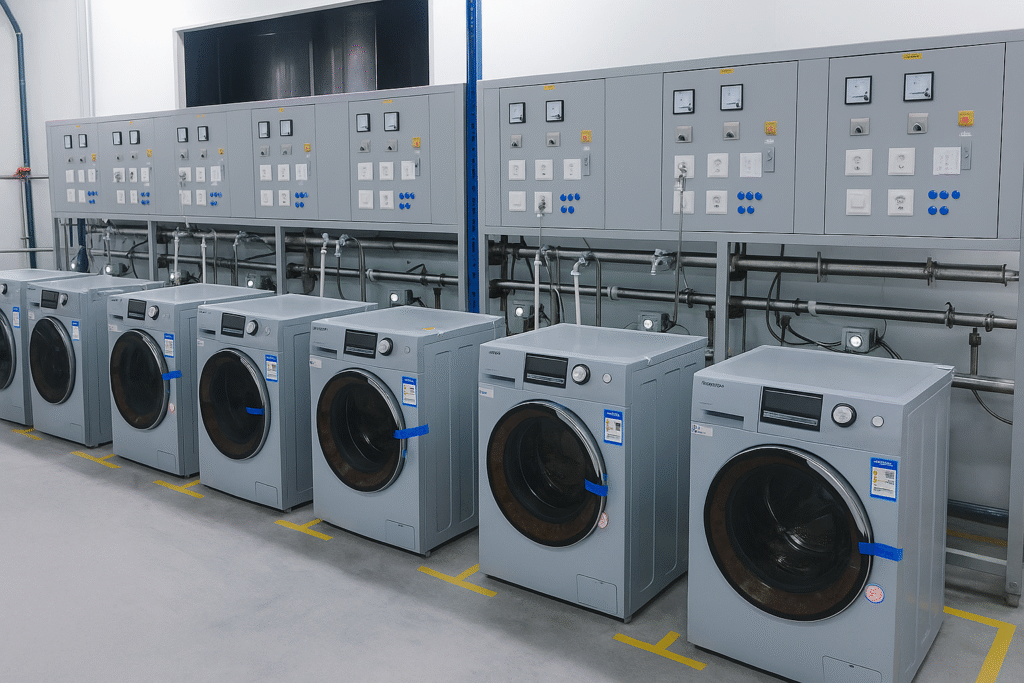
Step into ETI Automation’s renowned Washing Machine Test Lab in India, where precision and expertise drive every evaluation. As a leading Environmental Test Chamber manufacturer, we offer a specialized facility designed to set new benchmarks in washing machine performance testing. Our cutting-edge technology and expert protocols ensure reliable, accurate, and industry-leading results.
Inside ETI Automation’s Washing Machine Test Lab
At the forefront of innovation, ETI Automation is a trusted name in Environmental Test Chamber manufacturing. Our Washing Machine Test Lab reflects our commitment to precise and dependable testing procedures, supporting manufacturers in delivering high-quality appliances.
Explore the Advantages of Our Washing Machine Test Lab
Our versatile test facility is meticulously designed to evaluate all critical aspects of washing machine performance. This includes:
Washing performance and aging characteristics
Rinse and dry performance
Water and power consumption
Programming time and safety protocols
Packaging and delivery evaluations
We provide comprehensive testing to ensure every product meets global performance and safety standards.
Specialized Testing Expertise for Precision Insights
Harness the expertise of our dedicated team of engineers and technicians, who ensure accurate insights into your washing machines’ operational performance. Every test is conducted to deliver reliable, actionable results for product development and quality assurance.
Elevate Your Appliance Standards with ETI Automation
Manufacturers seeking a trusted partner for washing machine validation can rely on ETI Automation. Our Washing Machine Test Lab is more than a facility—it is a commitment to innovation, precision, and excellence.
Discover how ETI Automation’s Washing Machine Test Lab can enhance the performance, reliability, and compliance of your appliances.
Contact us today to experience the innovation and precision that define ETI Automation—your pioneering partner in washing machine testing excellence.
International Standards Compliance
All testing procedures at ETI Automation align with the highest international standards, including:
IEC 60456: Methods for measuring the performance of clothes washing machines for household use
IEC 60335-2-7: Particular requirements for the safety of household and similar electrical appliances, specifically washing machines
Get a Quote
Get a free quote for your conveyor system.
Need more help?
Contact our expert team for custom conveyor solutions and dedicated support for your project.
+91 98210 51034
Testimonials
Proven Client Success
Discover why leading companies trust ETI Automation for their most complex automation projects.




Common Questions
Most Popular Questions.
Your questions, answered. Browse our FAQs for help with our Washing Machine Performance Laboratory and automation solutions.
A Washing Machine Performance Laboratory is a specialized testing facility designed to evaluate the performance, efficiency, durability, and operational quality of washing machines under controlled testing conditions.
The laboratory can test various types of washing machines, including front-load, top-load, fully automatic, semi-automatic, and other domestic or commercial washing systems.
Performance testing helps manufacturers verify product quality, improve efficiency, ensure reliable operation, and maintain compliance with industry testing requirements.
Testing generally includes wash performance, water consumption, energy efficiency, spin performance, vibration levels, temperature conditions, and overall operational reliability.
Yes, washing machine performance laboratories can be customized based on product dimensions, testing standards, automation requirements, and manufacturer-specific testing objectives.
A performance laboratory helps identify performance issues early, validate design improvements, enhance product reliability, and support consistent manufacturing quality.