
Bottling Conveyor Systems for Efficient Bottle Handling in India
We develop creative, comprehensive, and sustainable engineering solutions for a future where society can thrive.
Overview of Bottling Conveyor Systems
In the current competitive market, bottling line conveyors act as core processes contributing to production efficiency with the logistic system and the total line automation in the beverage and liquid food packaging industries. These systems are designed to advance bottles through consecutive steps, including rinsing, filling, capping, inspecting, labelling and packaging, and are developed to meet rigorous throughput and accuracy requirements with minimum manual intervention.
As your trusted partner, ETI Automation provides fully scalable, purpose-built conveyor solutions that complement intricate production workflows and future industry requirements with proven engineering and systems integration expertise.
Bottling Conveyors for Beverage, Pharmaceuticals and Chemicals Industry in India
The bottling industry involves many types of equipment and types of machinery such as washers, fillers, packaging equipment, and so on. This equipment should be sturdy and capable for which clean and hygienic conditions are essential in the bottling industry.
ETI Conveyor has come up with unique solutions for the bottling industry. Our conveyor components, belts, chains for bottling industry are customer-centric, quality-oriented and cost-effective.
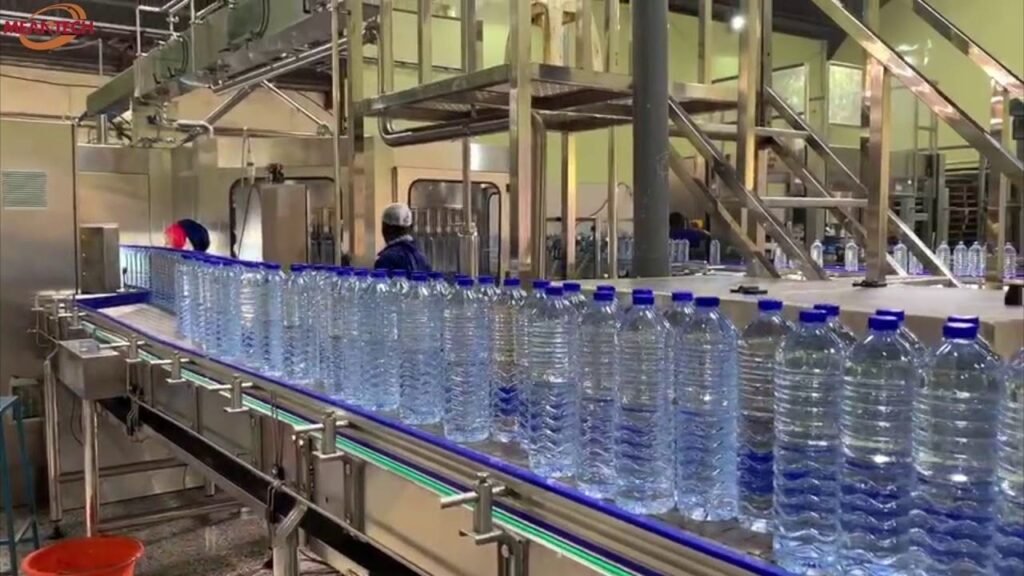
What Types of Conveyors Are Used in Bottling Lines in India?
- Belt Conveyors – Multi-purpose powered belts for conveying bottles in straight and curved layouts.
- Roller Conveyors – heavy rollers for safe transportation of full and empty crates.
- Slat Conveyors – modular slats with chain drives for clean and fast applications.
- Side-Grip Conveyors – accurate handling of cavernous-shaped bottles in critical operations.
- Overhead Conveyors – overhead carriers that are spaced sufficiently and suitable for transit and packaging areas.
- Chain Conveyors – Systems of chain drives have been developed for synchronous motion and positioning applications.
What Are the Key Features and Technical Specifications?
- High-Quality Materials – A corrosion-resistant stainless steel and food-grade polymers were used for hygiene and long-life.
- Variable Speed Drives – Throughput rate control for ensuring an optimally balanced line.
- Modular Construction – Segments scalable to facilitate rearrangement of the layout.
- Sanitary Design – Fast-cleaning surfaces and compliant materials for drink and liquid management.
- Integrated Sensors & Controls – PLC interfacing for real-time monitoring and automation scheduling.
- Robust Frame Structures – Engineered to support high payloads and continuous duty cycles.
What Are the Benefits of Using Bottling Conveyor Systems?
- Enhanced Operational Efficiency – Consistent flow of product with minimal downtime and variation.
- Increased Throughput – Machines designed for high-speed motion control can keep up with high production rates.
- Reduced Manual Handling Risks – Automation reduces ergonomic and safety concerns associated with manual transfer.
- Consistent Quality Assurance – Synchronising the system allows inspected defective products to be rejected online.
- Cost Optimisation – A reduced dependency on labour for repetitive tasks lowers expenses of operation.
- Scalability – Modular design allows for capacity increases and layout changes with little disruption.
What Is the Process Flow of a Bottling Conveyor System?
The bottling conveyor line starts with the bottle infeed, where the containers are emptied and loaded to be fed into the process. In addition, Rinsing & Cleaning Rhythms Rinse & Clean bottles for clean filling. When organised, the line proceeds to filling stations, utilising slug-fed delivery systems powered by calibrated conveyor systems. Next, bottles run to capping & sealing machines, which apply and secure closures.
After capping, systems bring the products into labelling & marking to provide brand identification and traceability. The final element is inspection & packing, with conveyors feeding the finished products to case packers or palletisers for dispatch. Throughout this process ETI’s automation integration delivers synchronised motion with minimum product dwell.
Which Industries Use Bottling Conveyor Systems?
- Water, carbonated drinks, juices.
- Beer, spirits, wine.
- Sauces, condiments, edible oils.
- Liquid medicines and healthcare solutions.
- Lotions, tonics, and liquid formulations.
- Industrial and cleaning liquids requiring controlled handling.
Why Choose Our Bottling Conveyor Solutions?
Teaming with ETI Automation enables your production with a strategic conveyor design focused on efficient, dependable and customisable solutions. With the background of good-quality industrial automation solutions, we supply a conveyor system designed according to your throughput and hygiene demands.
Our modular engineering concept allows for integration with existing lines and scalable solutions for the future, and our client-centric approach guarantees responsive support, optimised lifecycle performance and reduced total cost of ownership. The bottling conveyors from ETI allow organisations to achieve process excellence, consistent product quality, and sustained competitive advantage in ever-changing market environments.
Get a Quote
Get a free quote for your conveyor system.
Need more help?
Contact our expert team for custom conveyor solutions and dedicated support for your project
+91 98210 51034
Testimonials
Proven Client Success
Discover why leading companies trust ETI Automation for their most complex automation projects.




Common Questions
Most Popular Questions.
Your questions, answered. Browse our FAQs for help with our Industrial oven and automation solutions.
A bottling conveyor system is an automated material handling solution used to move empty or filled bottles through different stages of a bottling line, such as filling, capping, labeling, and packing.
The system uses continuous or indexed conveyors to transport bottles in a controlled manner between machines. Speed and spacing are synchronized to maintain smooth product flow and prevent bottle damage.
Common types include flat belt conveyors, modular belt conveyors, tabletop chain conveyors, roller conveyors, and accumulation conveyors, depending on bottle type and production speed.
Yes. Bottling conveyor systems can be designed to handle various bottle shapes, sizes, and materials, with adjustable guides and quick changeover options.
Industries such as beverages, pharmaceuticals, food processing, chemicals, cosmetics, and personal care rely on bottling conveyor systems for efficient production.
They improve production efficiency, reduce manual handling, minimize breakage, ensure consistent product flow, and support higher production speeds.
Yes. These systems are commonly used in high-speed bottling operations and can be designed to match the output of filling and packaging equipment.
Materials typically include stainless steel frames, food-grade belts, modular plastic chains, and wear-resistant components suitable for hygienic and industrial environments.