
Hybrid Palletizing Machine Manufacturers in India
This solution merges robotic and conventional palletizing for maximum versatility and operational efficiency.
Industrial Hybrid Palletizing Solutions
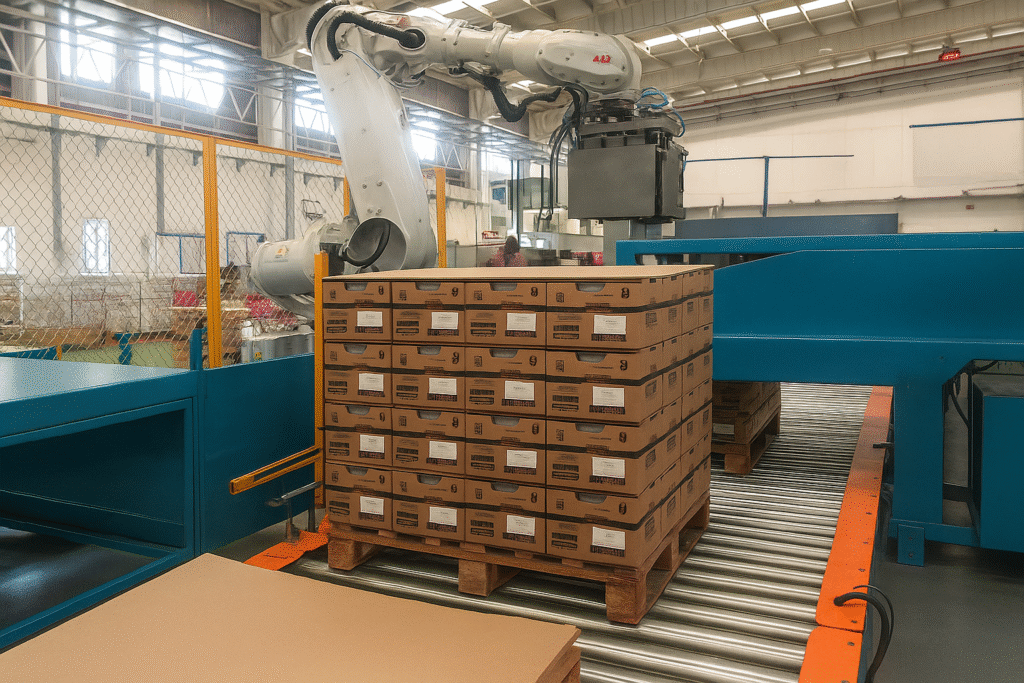
Our ETI Hybrid Palletizer combines the intelligent flexibility of a robot with the stable layer handling of a conventional high-level palletizer.
This system uses a precision robot to arrange complex patterns, which are then transferred to a compactor table. This crucial step ensures each layer, especially for unstable products like bags, is perfectly squared and secure. The complete, compacted layer is then gently moved onto the pallet, creating a highly stable, transport-ready load.
This hybrid approach delivers maximum versatility, effortlessly handling a wide variety of products and allowing for rapid pattern changes. It provides an adaptable, high-performance solution by merging robotic precision with high-speed layer handling.
ETI Automation’s Hybrid Palletizing System combines the flexibility of robotic palletizing with the speed and stability of conventional layer palletizing.
It is designed to handle a wide range of products, including cartons, bags, cases, and packaged goods. The system creates accurate pallet patterns, forms compact and stable layers, and ensures safe, transport-ready pallet loads. With fast pattern changes, reliable performance, and customizable configurations, it helps manufacturers improve productivity, reduce manual handling, and support continuous production across various industries.
ETI Automation is a leading Industrial Automation Solutions provider in India.
Type
1 in/1 out
Payload
5Kg – 200kg
Speed
10-20 cases/min, bags – 20 bags/min
Layout type
Customizable (with limitations)
Product size range
100mm – 500mm L
100mm – 500mm W
50mm – 400mm H
Product to be handled
Bags, cases, shrink packs, etc.
Solution
Robot + high-level
Infeed
Low
- Soft and malleable adjustable finger gripper that prevents product damage, tears, and dropping issues
- Rugged construction intended for continuous operations and designed for harsh environments
- Automatic pallet dispenser that can handle pallets of various sizes and quality lateral alignment bars to square layers
- Compression cycle to level products and better stabilize loads
- Intuitive and user-friendly touchscreen HMI
- Electric pallet lift for quiet operation
- Emergency-stop button, safety fences with trapped key interlocking, door safety circuit check, light curtains, and automatic locking pins on the elevator
- Bag preparation systems to level or flatten bags
- Automatic product changeovers
- Quick-connect power and control cabling for faster installation in your facility
- Automatic slip/top sheet dispenser
- Exit conveyor
- Leak, weight, and metal detection systems coupled with a rejection conveyor to remove non-compliant bags
- Servomotor or pneumatic-powered gripper for automatic product width adjustment
- Integration with concurrent stretch wrapping machines and third-party suppliers (labelers, printers, etc.)
Get a Quote
Get a free quote for your conveyor system.
Need more help?
Contact our expert team for custom conveyor solutions and dedicated support for your project
+91 98210 51034
Testimonials
Proven Client Success
Discover why leading companies trust ETI Automation for their most complex automation projects.




Common Questions
Most Popular Questions.
Your questions, answered. Browse our FAQs for help with our conveyor systems and automation solutions.
A hybrid palletizing system combines robotic palletizing with conventional layer palletizing for better flexibility and speed.
It can handle cartons, bags, cases, boxes, and other packaged products with different shapes and weights.
It offers high flexibility, fast pattern changes, and stable pallet loads in one integrated system.
It is commonly used in food, beverage, FMCG, chemical, and packaging industries.
Yes, it can be customized based on product type, speed requirements, and factory layout.
ETI Automation provides reliable and customized hybrid palletizing solutions designed for efficiency, flexibility, and long-term performance.